.webp)

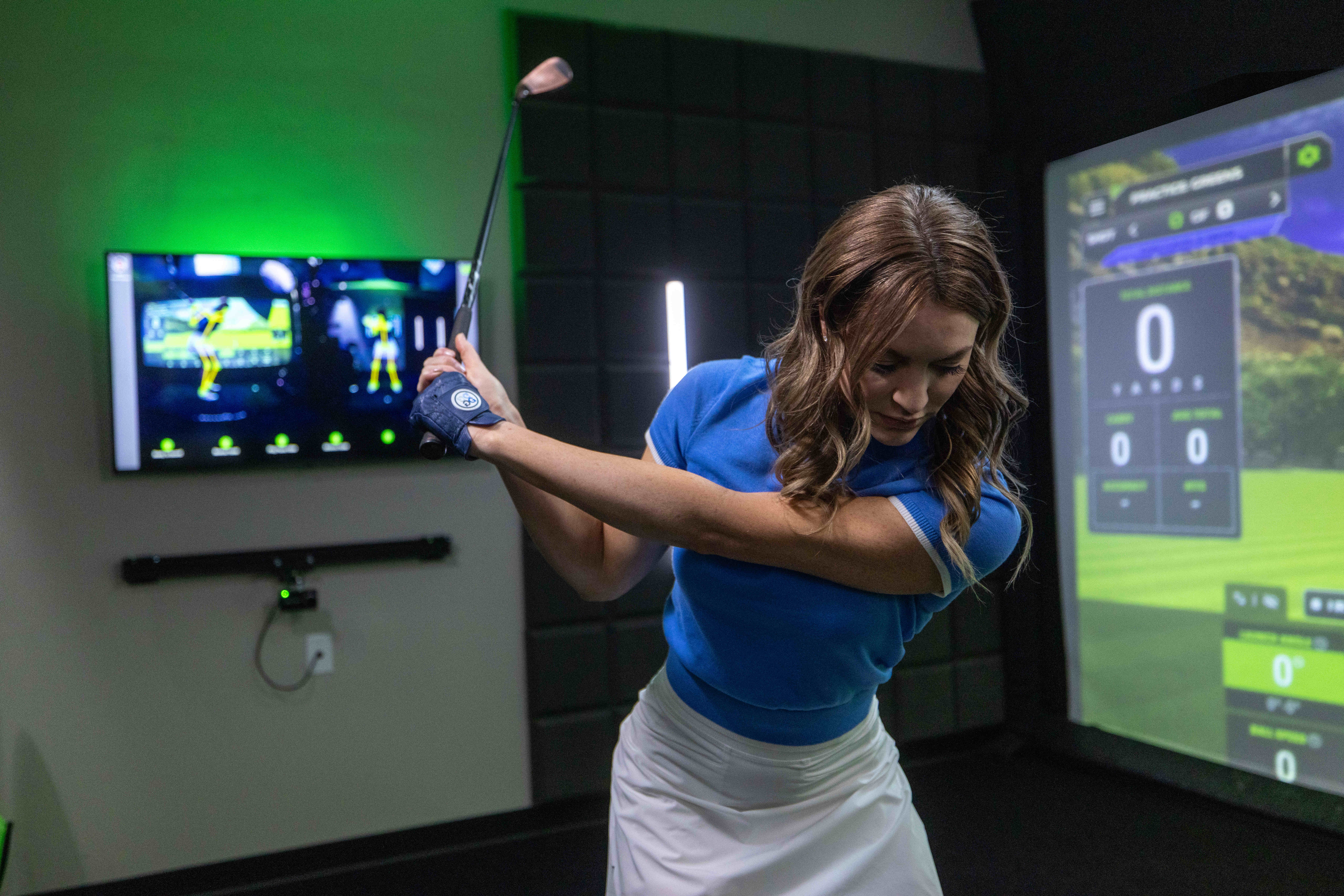

Lead elbow flex refers to the bend in your lead (front) elbow during the golf swing. More flex usually means more inconsistency—causing fat or thin shots. Better players maintain a straighter lead arm by pushing their arms outward throughout the swing, rather than pulling them in toward the body.
Table of Contents:
As a GOLFTEC coach, I wear many hats. Teacher, friend, cheerleader, bad guy (reality checker) and therapist. Every student needs something slightly different from me depending on where they are in their development — but the thing everyone has in common is that they're looking for clarity.
Bangkok's golf community is one of the most motivated I've come across. The city has a thriving mix of local Thai golfers, expats who've discovered the game here, and serious players who've relocated from competitive golfing markets elsewhere in Asia. What they all share is the same frustration: putting in the time and effort, but not seeing the results they expect. Typically, students come in with their own theory about what's wrong with their swing. The data usually tells a different story.
That's one of the things I value most about coaching at GOLFTEC: I don't have to rely on what I think I saw or what felt wrong. The numbers tell us exactly what happened and why. When we measure, we don't have to guess — and that's how we give students the clarity they've been looking for. We aim for this in every one of our golf lessons in Bangkok, but the real gains happen when students combine regular coaching with purposeful practice between sessions. Here's what I mean:
You Should Be Targeting Something Specific and Be Able to Measure It
Purposeful practice needs to mirror what a serious gym session looks like. A good gym session identifies the target muscle group, selects exercises designed around it, and tracks quantifiable results. Golf practice should work the same way: choose a specific fundamental to target — contact, power, or direction — and find a way to measure whether you're actually improving it.
The most important fundamental in the game is controlling your contact. That breaks down into two things: striking the middle of the face, and delivering a downward angle of attack with your irons. At GOLFTEC Bangkok, you can use our Foresight GC Quad during practice sessions to get real-time feedback on both. There's no more guessing whether a shot was good contact or lucky contact.
Here's an example of what a targeted session looks like. Start with 20 shots using a pitching wedge at half-swing speed. Your goal: centred face contact with a downward attack angle of more than 3 degrees. Once you're hitting that consistently, push further — try to exaggerate the downward strike into "too much" territory deliberately. This is where many golfers stop, but it's actually where the best learning happens. Knowing what too much feels like gives you the full range of the movement. Once you have it dialled with short swings, test it with bigger swings and longer clubs.
Before every session, decide what you're measuring. Is it club data on the GC Quad? Video review? A specific OptiMotion number? Pick one thing and judge yourself on that alone. Trying to fix multiple things at once almost never works.
Use Constraints and Manipulators to Force the Change
Bangkok golfers — especially those who've spent time playing courses like Thai Country Club or Royal Gems — know that range feel doesn't always translate to course performance. One of the biggest reasons for that gap is the difference between what you feel you're doing and what you're actually doing. When the club is moving at full speed, your sense of where it is in space is often completely wrong.
Constraints cut through that problem. Instead of trying to feel your way into a different movement, you use physical tools that force the movement to happen and give you instant feedback when it doesn't.
A towel placed 10cm behind the ball tells you right away if you're hitting the ground early. A pool noodle positioned outside the ball forces you to swing more in-to-out — you'll know immediately if you're over the top because you'll keep hitting it. These are simple, low-tech tools. But they work because the feedback is immediate, physical, and impossible to misinterpret.
This style of practice is particularly effective in GOLFTEC Bangkok's indoor training bays. Bangkok's heat and the rainy season make consistent outdoor practice difficult for much of the year — and the unpredictability of Thai weather means many golfers struggle to maintain a regular practice schedule. Having an air-conditioned, data-equipped training environment available regardless of conditions removes that barrier completely.
Vary Your Practice and Create Some Competitive Pressure
Block practice — hitting the same drill twenty times in a row — is genuinely useful for building a skill and building confidence. But if that's all you do, you're training for the range, not the golf course.
Think about how a round actually plays out — whether it's at Muang Ake, Royal Gems, or a day trip down to Pattaya. You never hit the same club twice in a row. The target changes constantly. Every shot has a consequence. That variability and that pressure are what make course golf different from practice golf, and your practice sessions need to replicate those conditions at least some of the time.
At GOLFTEC, there are practice modes specifically designed to close that gap. The Yardage Randomizer lets you set a distance range — say, 50 to 150 yards — and changes the target after every single shot. Virtual course modes put you in real course scenarios with real scoring feedback. Or you can build your own competitive challenge:
- 50 yards, 75 yards, 100 yards, 125 yards, 150 yards
- 3 balls to each target
- Track your total accumulated proximity to the hole
- Set a personal best and try to beat it every week
This is the kind of practice that creates real pressure — the kind that teaches you to handle nerves before it matters. Many Bangkok-based golfers play in regular competitions or social groups where the result counts. Practicing under simulated competitive conditions is the fastest way to make sure your range game actually shows up when you need it.
Summary
Golf is hard. It's significantly harder without a clear plan. And consistent improvement is nearly impossible if you don't know what to work on or how to practice it in a way that actually transfers to the course. At GOLFTEC Bangkok, we remove that uncertainty: our coaches use data to tell you exactly what to focus on, and our training environment gives you the tools to work on it properly between sessions. That combination — structured coaching and purposeful practice — is what actually produces lasting improvement.
Ready to practice with a plan that actually works? Book a session at GOLFTEC Bangkok and let us show you exactly what to work on — and how to measure whether it's working. Or explore our coaching packages to find the right program for your goals.

Play the best golf of your life. GOLFTEC Coaches use cutting-edge tech and proven methods to level up your game fast.
Book a Lesson
Play Better!